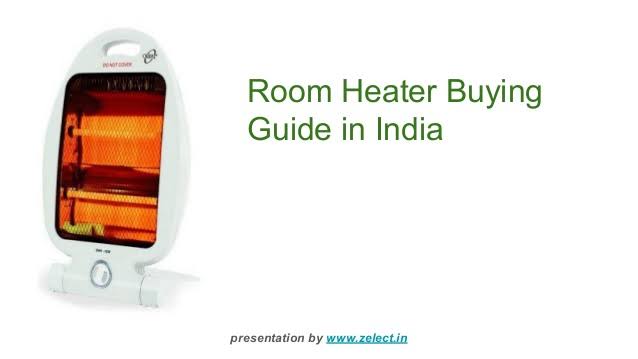
It is not easy to choose a single product among hundreds of options present in the market. To simplify this process, we have provided several factors to consider while purchasing a room heater. This buying guide will help you choose the right one according to your unique requirements.
1. Heating Technology
This is the first important factor to consider before buying a room heater. There are two different types of heating technologies – convection heater and radiant heater.
Convection room heaters are perfect for indoors while radiant heaters are prefect for outdoors. For more detail information, read below…
a. Convection Heater
This type of heating technology distributes warm air evenly and consistently throughout the room. They use air as the medium to increase warmth in the area. Generally, air is warmed up by blowing over a heating element which will be circulated through the room.
Usually, the heating elements can be made up of ceramic, electric-element or liquid filled. Convection heaters are perfect for closed spaces. They are preferred method of raising room temperature for extended period of time.
Convection heaters come in two different functionalities – with fan and without fan.
- Convection heaters with fan – As the name implies, they use fan as a medium to circulate air in the room. Fan present in this heater is responsible for taking the cool air, passing it over the heating element and re-circulating it into the room. They can increase warmth inside in well-insulated space much faster than convection heater without fan. However, due to the presence of fan, these devices make much noise.
- Convection heater without fan – Usually heating element in this type of heater is surrounded with oil or water. And the heating process will start a very slow pace. The heating process starts by heating the oil or water first and then later heat is slowly transferred into the surrounding air. But the heat generated can stay for long time as the liquid will stay hot for some time after switching off the device. As it doesn’t have a fan, the process is whisper silent.
b. Radiant Heaters
In this type of heaters, heat is generated from infrared radiation. Unlike convection heaters (where air in the room is heated up), this device warm up people and objects in the room.
Radiant heaters are perfect for…
- People can stay in line of its direction.
- Rooms where people stay still for long time (like bedrooms).
- Where people will stay only for few hours at a time.
As these heaters don’t warm up entire room, only people and objects near to it can reap the warmth benefits. It is beneficial for people with respiratory issues like dust allergies as it doesn’t depend on air circulation. As it is not dependable on wind, it is perfect for outdoors.
2. Room Heater Types
Based on their heating abilities, room heaters are further divided into the 3 types – ceramic, oil-filled and infrared. We have provided detail information below – read it carefully to understand which one suits your best.
- Ceramic Heaters
In ceramic heaters, electric current passes through ceramic heating elements. This lets the aluminum baffle and heating elements to quickly heat up. Meanwhile during the same time, the cool air is sucked into the base from the surrounding. After that, the air will be passed over the baffles and heating elements. This heats up the air and ultimately circulated into the room using a fan. That is why, they are often referred as ceramic fan heaters.
When compared to others, they operate at lower temperatures and are capable of releasing same amount of heat across the room. Ceramic heaters are generally used for small office or heating single room.
| Benefits | Drawbacks |
| Fan is used to provide instant hot air flow | As fan is used for air re-circulation, noise is produced. Check out the decibel level before purchase |
| You can aim the direction of air according to your requirements | Hard to clean so dust particles get stuck. People with allergies should avoid it |
| Perfect for small spaces like office room, cabins or any other | Not suitable for large rooms as it cannot maintain even temperature. Because instant heat temperature fluctuates often |
| Cools down quickly so a safe option for families with kids and pets | |
| Compact and portable |
- Oil Filled Heaters
Oil filled heaters just look like traditional radiators however, they are very small. They contain a series of joined columns that attached at the base with a control panel. Unlike traditional ones, oil filled heaters are portable.
Inside these columns, diathermic oil is present which acts as heat reservoir. As the oil is not used as fuel for heat generation, it will not be used which means you don’t have to refill.
Working of oil filled heaters – When you plug into the socket, the electricity will directly flow to the heat reservoir. This will turn electricity into heat which will then be absorbed by the diathermic oil. Once the oil is warmed up, it will flow through the columns. The movement of oil will transfer the heat into the metal columns. Now the heat will radiate around the room using air’s natural convection.
These types of heaters take some time in heating the oil but provide generous amount of heat enough to heat up the entire room.
| Benefits | Drawbacks |
| As fan is not used for circulating heat, operation is whisper silent | Expensive |
| Perfect for workplaces and bedrooms | Heavier and bulkier |
| Energy efficient as warmth will stay for long time even after you turn off the device | Poor choice for families with children |
| Best suited for heating larger rooms | Doesn’t heat up quickly as it takes 20 – 30 minutes for the oil to heat up and deliver heat |
| Suitable for people who have allergies like asthma | |
| Smart features like anti-tip and auto-off are available |
- Infrared Heaters
They are also known as radiant infrared heaters. They use the same working principle that heats up the earth – thermal energy will be transferred as heat to any object or person present in its path. Typically, infrared heaters use two types of heating elements.
a.Quartz Tubes – These encapsulated tubes usually have Nichrome heating wire (which consist of 80% Nickel and 20% Chromium).
b. Tubular Heating Element – This type uses solid metal elements for internal heating which similar to the working principle of oven – where the metal casing is heated up first which finally lets the heat transfer directly to the objects present around.
| Benefits | Drawbacks |
| Objects and people are heated up instead of air circulating around. So, it works instantly as soon as you turn the machine on. | Not suitable for large spaces |
| Uses light to transfer heat, so no noise | Cools down quickly once you switch off |
| As objects/people are heated up directly, no energy is wasted. So energy efficient | Heat also decapitates much faster |
| Compact and portable | radiates bright orange lights which can be disturbing, especially if placed in bedrooms |
3. Room Heater Size and Coverage
This is considered as one of the most important factors because – if you purchase wrong size, then you will end with overheated or less heated space. For example, if you purchase a large room heater for small room, then energy will get wasted and the room will be overheated. Just vice-versa, if you purchase a small room heater for large room, then enough heat will not be produced to warm up the room.
Appropriate room heater capability can be measure with wattage output. As a thumb rule, room heater that consumes 10Watts power will heat one square foot of area perfectly. So, if the room heater consumes 1500Watts, then you can heat up 150sqft.
So, if you want to custom calculate for your area, follow the below formula.
General Rule for Calculating Wattage and Heating Capacity in Sqft
As already mentioned, 10 watts of power lets to heat up 1sqft.
So, Total Wattage/10 = Total Sqft.
(OR)
Total Sqft X 10 – Total Wattage.
If you haven’t got much time to do the calculations, then below is a table representing, wattage and suitable coverage space.
| Wattage | Sqft (with well insulated, 8ft ceiling) |
| 800 W | 80sqft |
| 1000 W | 100sqft |
| 1200 W | 120sqft |
| 1400 W | 140sqft |
| 1600 W | 160sqft |
| 1800 W | 180sqft |
| 2000 W | 200sqft |
| 2500 W | 250sqft |
| 3000 W | 300sqft |
| 3500 W | 350sqft |
| 4000 W | 400sqft |
However, this value can fluctuate based on heating technology, room heater type, indoor temperature and some special cases that include…
- Infrared Heaters – As they don’t use air as the medium to heat up the objects or people, these room heaters have the potential to heat up large area with less power consumption.
- Ceiling over 8 Feet – If the ceiling of your room is more than 8 feet, then use the below formula
Total Sqft X Ceiling Height X 1.25 = Total Wattage Required - Poor Insulation – If you room is not properly insulated, then use the equation mentioned below.
Total Wattage / 12 = Total Sqft (OR) Total Sqft X 12 = Total Wattage
4. Safety Features
Just like any other electrical device, it is better to purchase a room heater that comes with at least few safety features. We have mentioned some of them below…
- Cool to Touch
As the name suggests, it specifies that the outer casing of the room heater is heat resistant. So, even if you touch it accidently, it won’t cause any burns. This feature is not available in some of the room heater products in India. This feature is very important, especially if you have kids or pets in the home.
- Tip Over Cut off Switch
Due to their compact size and light weight features, portable room heaters are often moved from one place to another – this sometimes makes it likely to fall or tip over, especially when it bumps with any object. In some situations, kids or pets may try to catch the room heater or even try to move it. In the cases of falling over or sudden power cut off, the room heater will turn off itself immediately to avoid any potential risk of fire hazards.
- Overheat Protection Switch
Overheat protection is another important safety feature to consider. This is available in most of the room heaters present in Indian market. When internal components reach unsafe temperature, the sensors will notify the switch to turn off immediately.
Apart from these three features, also consider others like protective grills to cover heating coils and thermostats. Some modern room heater models come with motion sensors which detect and turn of the heater when a kid or pet comes too close.
5. Heat Settings
Most of the room heaters come with heat settings which help to adjust according to room temperature. Generally, 3 heat settings are observed – low, medium and high which work by altering the wattage. You can also turn off heat setting option by switching a button, if it is not suitable for your requirements.
6. Oxygen and Humidity Levels
This is an important factor to consider if you have new born baby at home. Generally, radiation heaters or fans use oxygen while heating up the air, leading to less oxygen levels and humidity loss in the room. This can lead to nausea, dry nose and itchy skin, especially in younger ones. To prevent this, we recommend to place a water bucket in any corner of the room when you are using room heater. To prevent any issues, it is better to purchase oil-filled room heater as it can maintain humidity levels in the room.
7. Power Consumption
If you want to find out how much electricity does your room heater consume, then first thing to consider is the wattage. This number is usually printed on the manual or specifications on the package. Most of the room heaters consume 1500 Watts but some of them may consume slightly more or less than it. So, based on this number, lets calculate the amount of electricity.
First let’s assume, room heater you’ve got consumes 1500 watts. As 1,000 is equal to 1Kilo watt, your heater consumes 1.5 Kilowatts of power.
Now, electricity bills are usually calculated in Kilowatt hours. So, we have to calculate the amount of energy consumed while running the room heater (1.5 kilowatt) for one hour. Based on that, you have to multiply it with number of hours the room heater has been running.
For example, let’s say you have been running room heater in your living room or 8 hours. The calculation will be as follows…
- 1500 (Watts) x 8 hours = 12,000
- Now let’s divide it by 1,000 -> 12,000/1,000 = 12 (Kilowatts)
- Let’s multiply with electricity rate per unit. Average unit rate in our country is Rs.5.
So, 12units X Rs.5 = Rs.60 per day. - If you use 1500 Watts room heater daily for 8hours for a month, then you will get Rs.1800 electricity bill per month.
8. Power Cord
It is better to invest in a room heater that has at least 70 inches long power cord. This provides enough flexibility for power placement options. It also lets you keep it away from flammable things like beds, couch, curtains and others. Room heater without extension cord should be purchased. Heaters should be placed only on the floor for safety purposes.
Having a lengthy cord lets you use the room heater even in areas where outlets are not easily accessible. It also lets you move the heater around the room according to your preferences.
Important Note: You should never use an extension cord with space heater.
9. Noise Level
Just like any other electrical appliance, room heaters also produce some noise while in operation. Some of the room heater models produce more noise than others. Non-fan heaters (radiant heaters) usually operate whisper silent. So, they are perfect for bedrooms and office.
Basic thumb rule when considering noise factor is – fan equipped room heaters produce noise and fan-less models produce less or no noise. To check whether the product you choose produces noise or not, check out the decibel ratings. The higher the rating is, the louder the machine will be.
10. Thermostat
Thermostats are one of the important factors to consider while buying a room heater. Most of the room heaters have either adjustable thermostat or programmable thermostat. With the programmable thermostat you can set a desired temperature and the heater will automatically maintain the set temperature by turning the device on and off after particular intervals.
Though adjustable thermostat cannot maintain set temperature but still controls the heat output depending on your heat settings. Adjustable thermostats either have buttons or dials to let you adjust the heat setting from low to high.
11. Size and Portability
When it comes to portability, it is better to purchase a room heater with castor wheels. Because they make it easy to move the device form one place to another without any stress on the arms. It is also recommended to look out for side arms or handles, so that you can move the heater around without burning your hands.
Along with that, room heaters should be in light in weight to move it around easily and compact in size so that it can be move anywhere like under the table. Fan and radiant room heaters are light in weight, compact and easy to move around freely compared to oil-filled heaters.
12. Energy Efficiency
Room heaters cannot handle the amount of job a central heating system can do. They are designed to warm up small spaces. If you heat up large areas beyond the capacity of a room heaters, the you will have increased electricity bills.
Unfortunately, room heaters don’t come with energy efficiency ratings. And it is difficult to compare the energy efficiency of these devices as multiple factors can have an impact on their productivity. Some of these factors are indoor temperature, space size, whether the space is insulated or not, what temperature is set and others.
But, if you want to improve the energy efficiency of a room heater, then follow these simple tips…
- To minimize drafts and maximize heat retention, we recommend to keep the windows and doors closed while using room heaters.
- If the room heater has vents, then clear the accumulated debris and dust.
- To stay comfortable, it is better to maintain the temperature at lowest level instead of highest temperature at all the time.
- Positioning the heater to the right direction lets the heat reach the target area perfectly. This will stop you from turning the device to its highest level, thus prevents any energy wastage.
- Also check out for some features like timer, adjustable thermostat and low wattage power for reducing energy consumption.
13. Price and Warranty
A high quality room heater will obviously come at higher price. High end models will have extra smart features like remote control, energy saving mode, bathroom friendly and timer. Some affordable priced room heater models may not provide great smart features but they will surely provide enough warm that is required to make you comfortable.
When it comes to warranty, it is better to choose models with at least 6months or 1-year warranty. You can check out the warranty details in the product specifications.
Few Tips on Positioning a Room Heater in Right Place
Placing the room heater in a sensible place is an important thing to consider. If you place the heater in wrong place, then you are putting your family in danger. Below, we have mentioned few tips on where to place a room heater.
- Always Place the Room Heater on Flat Surfaces
No matter where you place the room heater, make sure the surface is flat. If the surface is not flat, then the device can tumble down or knocked over easily.
- Clearance Around the Room Heater
You have to make sure the room heater is not obstructed with anything. Unless it is a wall mounted one, it is better to have at least 2 to 3 feet away from the wall. When it comes to sides or front, make sure to maintain another 3 feet distance.
- Portable or Mounted
As the name suggests, mounted room heaters are fixed into a wall. In some cases, baseboard heaters are mounted at the bottom of the wall near the floor. If you have pets or children roaming in your home, the mounted room heaters are the best choice. They are cool to touch (while in operation). However, you should make sure they are not obstructed by anything.
The most important thing to consider while installing a wall mounted room heaters is – the heat flow should not be obstructed by furniture or another wall. If you have a portable room heater, then you have to be careful where you place it. Avoid places where it can easily be knocked over. Tables and shelves are the worst places to keep portable room heaters.
- Keep the Moisture Away
As room heaters work mainly on electricity, they should never be placed in damp areas. So, never take your heaters to camping or use it in kitchen, bathrooms or anywhere else with wet surroundings. Some heaters (usually wall or ceiling) are specially designed to be used in bathrooms. If you want to use them, then you should install them in right position. Another important thing is – never attempt to dry your wet clothes by placing them over room heaters. It is not only dangerous but also obstructs the air circulation from heater – which can ultimately start fire.
- Clear Path
You should always ensure the room heaters are not placed in the walking path. This lets you walk freely around the house. And it also keeps children and pets safe while the heater is in operation. Also make sure there is enough space present around the room heater so that there is proper air circulation.
Safety Tips to Consider While Using Room Heaters
According to a survey, 40% of house fires are result of room heater misuse. These fire accidents are caused when flammable materials get in contact with room heater. So, while using a room heater, it is important to follow some preventive measures and safety guidelines.
- Never operate a room heater when flammable liquids are present in the surroundings. Flammable liquids include gasoline, paint, alcohol and others.
- It is also not recommended to leave magazines, newspapers, or any other paper near a room heater.
- It is not advised to leave a room heater unattended. If accidentally knocked over, it can start fire.
- Avoid placing a room heater near curtains because if curtain fabric gets sucked in, it can lead to fire accidents.
- Avoid using extension cords to connect room heater.
- If room heater has damaged parts or missed cords, then replace them before use.
- While room heater is operating, please close the windows and doors. Because rain or moisture can break the unit and cause fire.
- Make sure children are at least 3 feet away from the heater. Never leave children unattended when heater is in operation.
- It is recommended to read the manual completely before using the heater.
Benefits of Using a Room Heater
1. Portability
This is one of the most important advantage for a lot of people. If you are purchasing a room heater for your home, then you may go with portable ones as they are easy to move around. However, if you don’t want to move the heater from one room to another, then you can go with wall mounted or baseboard room heaters. As they are mounted to the wall, they are much safer and permanent option.
2. Safety Features
Most of the room heaters are designed for portability and safety. Some of the room heaters come with anti-tip switch which lets the device turns off when it senses that the heater is no longer upright. If the room heater is using fuel for operation, then it may also come with low oxygen levels sensor. This safety feature will let you turn off when the oxygen levels in room drop to low.
3. Noise
Some heaters use fan for circulating heat while some others use convection current or radiant heat for circulating warmth. Devices with fan are a bit noisy – others can pretty much whisper silent. Silent ones are perfect for bedrooms, offices or any rooms you need a quite atmosphere.
4. Versatility
Whether you want to heat up a small area or require infrared heater for zonal heating or if you want a heater for large workspace, you can find a suitable room heater for all kinds of unique needs. The market has several choices in terms of shapes, sizes, and designs – making room heaters a versatile option.
5. Effective
Though room heaters are small, these devices surprisingly provide a large amount of heat. You will often find even portable space heaters are capable enough to heat an entire room.
6. Controlability
Some room heaters are available with several controlling options that just turn on or off. Some of them come with options like turning the fan speed down and some others come with digital or manual thermostat options. Some of the modern room heaters even come with remote control option which lets you control the settings without stepping near the device.
 Water Heater