Be yourself; Everyone else is already taken.
— Oscar Wilde.
This is the first post on my new blog. I’m just getting this new blog going, so stay tuned for more. Subscribe below to get notified when I post new updates.
Be yourself; Everyone else is already taken.
— Oscar Wilde.
This is the first post on my new blog. I’m just getting this new blog going, so stay tuned for more. Subscribe below to get notified when I post new updates.
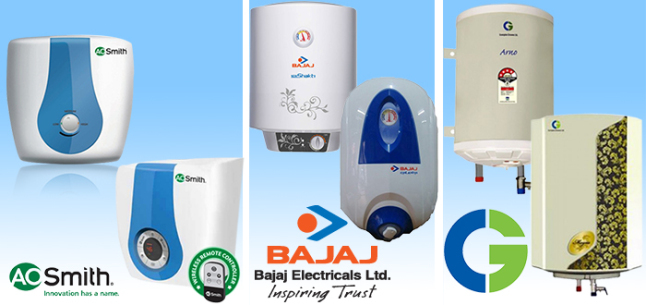
Now-a-days water heaters have become one of the must-have appliances in our home, especially during cold seasons. Because, traditional methods like heating water over gas stoves are not only dangerous but also uncomfortable.
Geysers come in two different models – storage Geysers and Instant Geysers.
When compared to instant geysers, storage water heaters provide hot water without any pause. However, they are bit expensive and take more wall mounting space.
While purchasing a water heater, you have to consider below important points…
While these are the three important factors, there are a lot more that you need to consider. We have provided detailed information of them in our “Buying Guide“. Apart from that, we have also picked out the best water heaters in India after carefully analyzing quality, durability and service.
Best Water Heater – Geysers Reviews in India
This make in India product comes with some impressive features designed to tackle the hardness of municipal water. The 25-litre storage tank capacity works efficiently time and energy wise without causing much concern to you. The features are quite same as our topper but this one comes with a commendable 25 litres of capacity. It is worthy of the second spot on the list.The vertical water heater comes with a glass lined inner tank that helps in the prevention of limescale buildup in the tank. The magnesium coated anode rod not only prevents corrosion but also prevents water leakage. The Incoloy heating element ensures a longer shelf life to the product. The heater is also suitable for high water pressure (8Bar) and pressure pump installations.
This ultra safe water heater comes with certain safety measures to keep water from overheating/dry heating. It can also tackle excessive water pressures. The cable extension of the heater is also fire retardant. The heater has a 4 star BEE rating which means you can save a lot of time and money. Once heated, the PUF insulation in the tank captures the heat and maintains the temperature for a longer period of time even when the power supply is cut off.
Notable Features:
Verdict:
The Bajaj New Shakti water heater is highly adaptable to all kinds of spaces. Whether you like to fit it in the laundry room or in the bathroom, the vertical build sits perfectly on the wall without taking up much space. Available for a decent price, the water heater has low maintenance and high safety features. The outer tank is made of metal preventing any external damage to the product and the outer body is made up of plastic which helps in preventing rust formation. The three pin fire retardant cable extension is an added bonus to this energy efficient heater. Its high pressure withstanding feature makes it ideal for high rise apartments.
What We Liked:
What We didn’t like:
The leading U.S water heater company has taken the Indian market by storm with this stylish and compact 15 litre water heater. AO Smith is known for its innovative technologies that improve the longevity of the appliance. Available in two models (15 and 25 litre); this water heater comes with 5 star BEE rating ensuring its superior quality and efficiency towards energy savings. The water heater is best suitable for Indian water conditions as the municipal water supply in most areas is hard water. And this is it is our top pick on this list.Its innovative Blue Diamond Glass line technology makes the inner tank stronger and corrosive resistant. The anode rod with a stainless steel core works towards extending the shelf life of the tank by protecting it from corrosion by hard water. The patented glass coated heating element prevents limescale buildup in the tank and ensures a longer life for the product.
The chic design of the water heater carries a temperature control knob on the front panel. The control knob allows you to adjust the temperature (25-75℃) at which you like the water to get heated. Auto thermal cut-out works wonderfully if and when the water exceeds the highest pre-set temperature. The thermal cut-out shuts off the power supply when the water temperature exceeds. Similarly, a safety valve keeps the water pressure in check by automatically relieving water when the pressure shoots up a preset limit.
Notable Features:
Verdict:
This small and compact water heater works wonderfully with excellent safety features that allow children to handle it freely. The innovative anti-corrosion technology ensures low maintenance. It is best suited for our hard water supply. It comes with an impressive warranty package but the after sales service is not good. Apart from this small glitch, the water heater scores high amongst its counterparts. Once heated, the water temperature is maintained for up to 12 hours. Easy handling, quick heating feature and hassle free maintenance.
What We Liked:
What We Didn’t Like:
The Misty range of water heaters by USHA combines efficiency and safety to its beautiful build to give you a reliable geyser. The Misty water heater is known for its safety systems and utility.
This classic package of performance, safety and energy saving feature makes it an ideal choice for your home. For optimum protection, USHA water heaters are equipped with features that work towards preventing overheating and dry heating, temperature and pressure control and prevention of electrical leakages.The inner tank is made up of high quality steel and coated with sapphire powder and glass lining. Adding to this, the anode rod is coated with high magnesium concentrate to protect the tank against corrosion and electrochemical reactions. Apart from this, the polyurethane foam insulation helps in retaining heat within the tank, thus saving energy. The Incoloy 800 heating element with enamel coating heats up water pretty quickly reducing the wait time.
The single weld lining of the inner tank reduces unwanted leakages ensuring extra safety. The heater is equipped to high pressure (8 bar) making it ideal for multistoried buildings. The whirl flow technology in the water pipes ensures the heaters efficient performance. IPX4 protects the electrical units from water splashes and leakages. High precision thermostat works wonderfully in controlling the temperature and initiating the auto shut-off. The multifunctional safety valve controls the water pressure and prevents backflow of water.
Notable Features:
Verdict:
The water heater has a beautiful design on its ABS body. The heater is decently priced for the features it promises. Safety takes the center stage with this water heater. Super smooth performance and durability are what one can expect from this heater. It takes about 10 mins to heat up the water in the tank. However, installation and after sales service is bad!
What We Liked:
What We Didn’t Like:
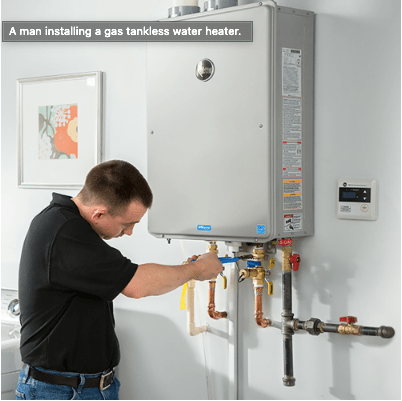
As more and more American homeowners make the switch from conventional water heaters to high efficiency tankless models, many opt to replace their heaters on their own, as opposed to contacting a professional plumbing service provider. While it’s certainly possible to install a tankless water heater on your own, you should only do so if you’re absolutely certain you can take on the challenge, and have the right tools and know-how for the job.
Tankless water heaters can help you save dramatically on everyday water and energy consumption, it’s no wonder that, when traditional units start to show signs of age, many make the upgrade. In this blog post, we detail how you can, with the right preparation, install a tankless heater entirely on your own.
Note: this blog details how to install whole house tankless water heaters, as opposed to point of use heaters, which can be installed relatively easily near the fixture they are heating water for.
Installing a tankless water heater on your own is one of the most difficult DIY plumbing projects we’ve discussed in our blog. Tankless heaters typically require a larger supply of power and wider exhaust system, and you may end up with more work than you initially bargained for in your efforts. Additionally, a common gas supply line material, corrugated stainless steel tubing (CSST), can become damaged or ruptured in some environmental situations, throwing added complication into your project.
Read through the rest of this guide to determine if you’re up to the task, and if not, don’t hesitate to have a professional plumber handle the installation for you. It’s better to be safe than sorry.
Moving on to the materials you’ll need for the job. When it comes to installing a tankless heater, most of the the tools and fixtures you need will come packaged with the unit:
Your new tankless heater, plus the hardware and instructions that come packaged with it
During the preparatory stage, you should also read up on building codes in your state and city to ensure you have the clearance to install a tankless water heater, as well as CSST pipe, in your property.
It should come as no surprise that the first big step in installing a tankless water heater is removing your old, traditional heater unit. Start by turning off the water supply to your home and disconnecting the old unit from the water supply line. As there may be some water left in the supply line, this is where having a bucket on-deck can help.
Next, you’ve got to disconnect the unit from its heat source. For electric heaters, all you’ll have to do is unplug the heater from its outlet. For gas heaters, shut off the gas supply valve before moving forward. Once you’ve completely freed your traditional water heater from all power and supply lines, get rid of it in accordance with local laws.
In Sacramento (and all of California), simply trashing old water heaters is prohibited, as they typically contain pilot light sensors – which contain mercury. Instead, you must contact a recycling and waste management agency in your area to dispose of your old water heater. A list of Californian hazardous waste agencies can be found here.
To actually mount the new heater unit to your wall, carefully follow manufacturers instructions and use the hardware provided. Make sure that the unit is properly supported and fastened to your wall.
Connect the water line to your mounted unit (or install a new one, if necessary), and use hanger brackets to hold the pipe in place and prevent it from touching walls and other surfaces. Solder pipe joints as needed.
The following instructions are for gas-powered tankless water heater. With the water line connected, install a gas line connector to your existing line, and run a CSST supply line through the other end. Make sure the gas line is still shut off, and connect the CSST line to your tankless heater.
Tighten all nuts and gas line connections, and turn on the gas. At this stage, you may want to use a gas sniffer to check for gas leaks or loose fittings. If there are no such leaks, you can turn on the gas and pilot light as per manufacturers instructions and test your unit. It may take time to initially heat up water on first use.
For electrically-powered tankless heaters, all you have to do once the water line is connected is plug into a power supply. From here, you can check your unit and enjoy hot water at much higher efficiency – and lower cost – than you would with a traditional heater.
Tankless water heaters are sexy. They take up less floor space, they provide an endless flow of hot water, they’re environmentally conscious… and they’re really expensive. If you enjoy showing off your home’s mechanical equipment to your friends or you’re in to being green at any cost, get a tankless water heater. On the other hand, if you’re in to saving dough, doughn’t buy a tankless water heater.
A tankless water heater will not save you money.
I stopped by my local big orange box the other day to check up on the latest sales pitch for tankless water heaters. The brochure for tankless water heaters said they can save up to 25% in fuel costs. That sounds great, but lets examine what that means. I spend about $12 per month for natural gas during the non-heating season, if I don’t include my fixed fuel costs, such as the ‘fuel delivery charge.’ This figure includes the gas for my water heater, clothes dryer, and oven. Just for the sake of argument, lets also pretend that I don’t have a family of four who uses the clothes dryer all the time, and I don’t use the oven all the time. We’ll pretend that I spend the full $12 / month just to keep a 50 gallon tank of water hot all the time.
If I save 25%, I’ll save $3/month, or $36/year, or $720 over a period of 20 years. My standard 50 gallon water heater has a 12 year warranty, and so does the tankless water heater I looked at… but the life expectancy for a tankless water heater is apparently 20 years, so I’ll give it the benefit of the doubt and assume it will last that long.
The brochure on tankless water heaters said I should buy the largest tankless water heater they make, based on the number of bathrooms I have in my house – three. The particular model is the ECOH200DVN. This unit boasts a 9.5 gallon per minute flow rate at a 35 degree rise in temperature. With an average ground water temperature of 45 degrees here in Minnesota, that would give me… 80 degree water. Ha! That’s useless. To get 120 degree water, my flow rate would be reduced to 5.1 gallons per minute. Maybe I’ll need two water heaters. For the sake of argument, lets just say I only need one. This unit retails at my local Home Depot for $1,427.00.
Plumbers charge a lot more money to install tankless water heaters, because they’re a lot more work compared to traditional storage tank water heaters. The water supply pipes will need to be re-routed, the venting will need to be completely redone, the unit will need to be mounted on a wall, an electrical outlet may need to be added, and the gas pipe may need to be re-done. Just for fun, let’s say you were able to find a plumber to do all of this for $1,000. A traditional water heater might cost up to $500 in labor for replacement, so we’ll assume you’re only spending an extra $500 in labor for a tankless water heater.
A traditional 50 gallon water heater with a 12 year warranty retails for $559 at my local Home Depot. I would spend an extra $868 to buy a tankless water heater, and at least an extra $500 in installation costs, making this unit cost at least $1,368 more than a traditional water geyser. I would spend at least $1,368 for the potential of saving $720 over a period of 20 years. If I ever buy a tankless water heater, I won’t be doing it because I’m hoping to save money.
Hot water heater is one of the unnoticed appliances but very essential to our homes. We rely on them for all the hot water supply in our homes. That’s why in most households Brisbane, a water heater system is a necessity. With the cold seasons like winter, you cannot afford to miss an efficient and reliable water heater system for a shower. Apart from a warm shower, we also need a hot water supply for laundry, washing dishes amongst other activities. However, the challenge comes when a homeowner is to choose a water heater system that meets their household needs.
If you are planning to go for a new water heater system, you should know that there are various types in the market. That’s what makes it difficult for the newbies. But worry not! If you are a first-time buyer with no idea what to pick, you need to read this guide. We have analysed 4 main types of hot water systems in Australia and why you should choose either of them.
These are the 4 main types of hot water systems you can choose from in Brisbane.
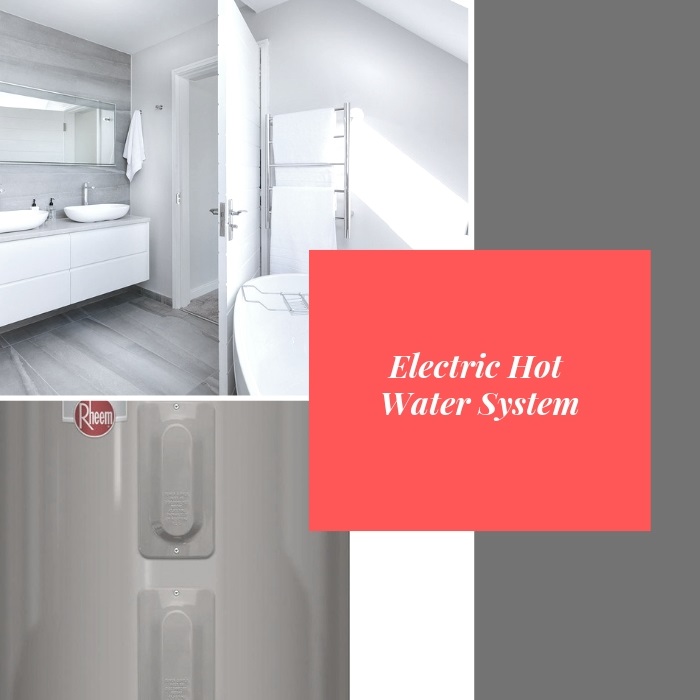
An electrical water heater is the most widely used systems in Brisbane and across Australia. That is because of a number of benefits that it has over most of the available alternatives. For instance, if you have a small family, then an electric water heating system is the perfect choice for you. As the name suggests, these water heaters are powered by electricity, and that is why every house in Brisbane can easily install them. It is also arguably the cheapest system in the market. There are many reputable brands of electric water heaters in Brisbane such as Rheem hot water heaters that buyers can select from. Here are some of the major pros and cons of an electric hot water system:
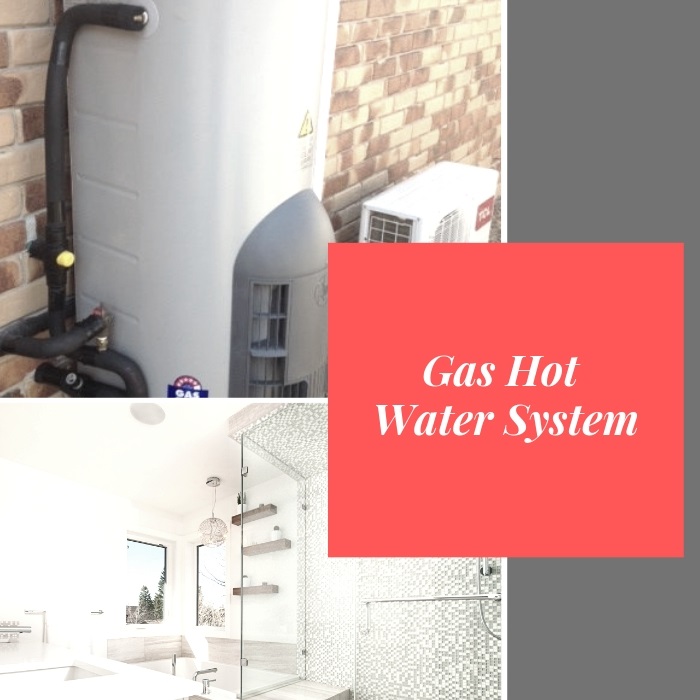
Gas water heaters are increasingly becoming popular in Brisbane due to a number of advantages over electric water heater models. First, they are great for large families because of their high recovery rate or rapid heating. The amount of water that they can heat to a certain temperature to a given time period is higher compared to an electric water heater. In fact, it has been proven that they can heat twice as fast as the electric hot water heater system.
If you are connected to the natural or LPG gas, then you should consider getting a gas hot water installation by a licensed plumber. There are two main types of this water heater: gas continuous flow and gas hot water cylinder. The continuous flow or tankless model is the most common in Brisbane since it does not require a tank of storage.
Here are the key pros and cons of a gas water heater system:
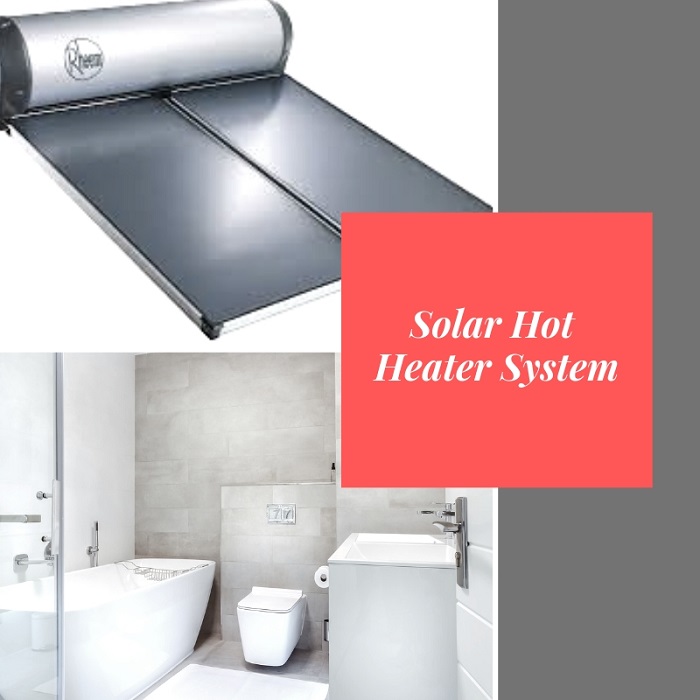
With global warming becoming a real threat to planet earth, eco-friendly solutions are being advocated to line greenhouse gas emission. Solar hot heater system is one of the best example eco-friendly solutions in water heating. The system is powered by solar energy that is freely available and renewable. The water heater system is gradually gaining popularity in Brisbane due to its numerous advantages over most of the available alternatives. Although the initial cost is high, the running cost is almost zero.
Apart from the low cost of operation, that you’ll enjoy various government rebates for going fully green or using renewable energy source. However, to improve systems efficiency, it can be fitted with gas or electric fuel booster for winter or cold season.
Heat pump water heater is one of the most efficient water heating systems in Australia. As the name suggests, the system works the same way as the heat pump. It is a water heater that works by drawing natural heat from the surrounding and use it to heat water. So the heat pump water heater simply works by pulling heat from the surrounding and depositing it into the tank to heat water.
However, the heat pump water heater uses electricity to move the heat only and not heat water. Therefore, the water heater system would actually not ‘make’ heat. That is what makes it one of the most efficient water heater systems in the market. Also consider improving your hot water heater’s efficiency. Here are the main pros and cons of this water heating system:
These are the four main types of hot water systems that you can select from in Brisbane. In spite of that, choosing the best type for your home will depend on three key factors: available fuel, your budget, and the size of the family. If electricity is the only available fuel, then the electric water geyser model is the best choice and so on. If you have a good budget, then go green with solar-powered or gas-powered type. For a large family, gas powered is the most recommended hot water system.
If you need professional help to choose the right hot water system for your home in Brisbane, call Hot Water Brisbane. We are specialists in hot water systems. Our plumbing company is also offering a range of hot water system services including installations. Call us any time you need help with your water heater in Brisbane.
In the majority of households, the availability of warm, running water is vital to everyday living. From showers, baths and frequent hand–washing to cooking, laundry and dish–cleaning, the average person could end up utilizing water of varying warmth up to 20 times per day. When you multiply that usage by each household member, the demands placed on the water heater is brought into perspective.
Sooner or later, you’re bound to see signs that your water heater needs to be replaced. Whether it’s due to usage strain or the age of the tank, water heaters — even the best of them — have a lifespan of roughly a decade. While you can help prolong the life of your water heater with annual maintenance, chances are you’ll need to have the pre–existing tank replaced with a new one if you occupy a given residence for more than eight years. Therefore, it’s important to know as a homeowner about the signs that would indicate when it’s time to replace your water heater.
Nothing lasts forever, least of all a water heater. During the course of an average home occupancy, a resident is bound to face that moment where they need to replace a water heater. Trouble is, most homeowners are unaware of when a water heater reaches its expiration date. Not knowing this, however, can lead to major risks when the heater starts acting up due to old age.
— The majority of water heaters last between eight and ten years. While ten is the age at which heater replacement is generally recommended, the actual need to replace a heater could arise before or after this timeline. Whether or not a heater begins showing symptoms, you should replace it once a decade has passed from its manufacture date.
A water heater should be replaced beforehand if it shows the following symptoms:
— Not all water heaters have a life expectancy of up to ten years. The main exception is gas water heaters, which generally only last between six and eight years. Therefore, if you only occupy a given residence for an average homeowner span of seven or eight years, chances are you’ll be responsible for the replacement of the water heater if it’s gas powered.
— The way to learn about the age of your water heater is to look at the serial number, listed on the manufacturer’s sticker that can usually be found on the upper half of the tank. However, the number won’t list the date in a readily identifiable format. Instead, you’ll see numbers that look like the following:
The letter at the start of each number is code for the month of the year. The letters G, D and I are respectively the seventh, fourth and ninth months of the year — thus the numbers are for heaters that were manufactured in the months of July, April and September. The first numbers that follow the letter represent the last two digits of the year in question — thus the three serial numbers are for heaters that bear the following dates of origin: 07/2006, 04/2004 and 09/2007.
Even though steel is the strongest material on the face of the earth, it has a weakness: rust. When corrosion takes hold on a steel surface, it slowly spreads and eats through the steel in certain spots. On water pipes and tanks made of steel, rust serves as the warning sign for oncoming leaks.
Trouble is, it’s often hard to tell whether rust is coming from the water heater itself or the pipes that lead to your faucet. In any case, rust is an immediate problem that needs to be rectified for the sanitation of your household.
— When rust appears in the hot water from the faucets in your sink and bathtub, chances are you have a rusty water heater. On heaters used past their expiration date, rusting is inevitable. Rusting can occur in any water heater, even those that are only between eight and ten years old.
— If you spot rust around the water inlet or pressure relief valve on the heater, it’s likely that rust has also taken hold inside the tank. If that’s the case, the only option is to replace the tank as soon as possible. There’s no way to salvage an aging water heater once rust enters the picture.
— If tap water comes out rusty, it could also be a matter of the pipes. If your piping system consists of galvanized pipes, rust could form on the insides with age, and the problem can sometimes get so intense that it becomes noticeable in sinks and tubs.
One way to determine whether rust is originating from your pipes or from the water tank is to drain several buckets worth of hot water from the tank. If the water still comes out rusty by the third bucket load, it’s definitely a problem with the tank and not the pipes. This, of course, would mean that it’s time to replace the water heater. After all, water leaks could soon appear if the rust eats through the steel.
Another telltale sign of an ailing water heater is noise from the tank. As the heater ages, rumbling noises will start emanating louder and louder as the tank heats up water. In households that consume large amounts of hot water, the problem is likely to be even more pronounced once the cause takes hold. Noise from a water heater is generally due to the following causes:
— As an aging water heater is continually called upon to heat and reheat water, sediment starts to form on the bottom of the tank. Over time, the sediment hardens and grows thicker along the tank floor. Sediment can wear a water heater down rapidly and lead to the following problems:
Noise from a water heater caused by sediment buildup is often an indicator that the tank will eventually leak. However, the damage that sediment causes can be stopped with the following method:
— The tank to your water heater should be flushed on an annual basis. Doing so drains the sediment from the tank, which is then able to work more efficiently. With a yearly tank flush, a water heater is likelier to last for its full life expectancy of roughly ten years. It’s best to have licensed plumbing professionals perform the flushing.
If a tank still makes noise once sediment has been flushed, there is probably a more serious problem with the water heater overall. In any case, healthy water heaters shouldn’t make noise, and those that creak or rumble despite periodic flushing are likely on the verge of a crack or leak regardless, and should therefore be replaced as soon as possible.
As your water heater nears the end of its life expectancy, there’s an increased chance that you’ll see water appear on the floor around the tank. When you see water, it generally means one thing: leaks. Depending on where you have the water heater located inside your house, a leak could result in significant property damage. As such, the most dangerous problem that could ever occur would be a serious leak with your water heater.
— Water leaks are often the result of expansions to the metal in the tank. These expansions occur over time as the inner–body of the tank is exposed to thousands upon thousands of heating cycles. When a fracture first forms, the gap is likely to be slight enough to hold water in all but the most trying circumstances. Therefore, when the tank is idle, water won’t leak, but when the metal expands at the height of each heating cycle, small amounts of water are bound to leak through the gap.
— Water leaks aren’t always the result of expansions in the metal. In some cases where leaks have occurred, there might not even be any problem with the tank itself. If water has appeared around the tank, check the following components of the water heater for signs of wetness:
If leaking is evident in either of those areas, there could be something wrong with the fittings, in which case you’ll need to have a plumber come and examine the issue. If the connections and fittings show no traces of leaks, the tank itself is most certainly at fault. You can rectify the former problem with tightening and adjustments, whereas tank leaks really have no remedy. Therefore, if water is leaking directly from the tank, it’s time to replace your water heater.
— A leak in your water heater could be one of the most serious home maintenance issues that you’re liable to face throughout the span of an occupancy at a given residence. If the heater is located within your house on the ground floor, a leak could unleash the following consequences:
Therefore, you’ll want to have a leaking water heater replaced immediately if the unit is situated at ground level inside your house. A minor leak might not be quite as urgent if the heater is located in your basement or garage with no valuable belongings placed nearby, but you’ll still want to act sooner than later.and also buying water heater online help to grab a great deal.
Warm and hot water are among the most vital household necessities. Without warm water, you can’t wash your hands or take showers, nor can you clean dishes or run your laundry machine. Most residents take warm water for granted, and are therefore set off balance whenever water from the sink or bathtub fails to reach sufficient warmth.
The loss of heat in your water supply is likely down to one of three possible issues with your water heater:
The first two problems are easy to rectify and do not necessarily indicate any need for heater replacement. Only the third problem is a likely indicator that, yes, you probably do need a new heater.
— If the water from your faucets fails to reach adequate levels of heat, the problem could be down to an issue with the electrical thermostat. For problems such as this, the solution could depend on a simple thermostat adjustment. In order to bring sufficient warmth to a household water system, the settings on a thermostat should be between 120 and 140 degrees.

— If nothing but cold water pours from your sink and bathtub faucets, the issue could stem from a broken heating element in your water heater. With a simple call to your local plumber, you can likely get the repairs you’ll need and have the heating functions restored within hours. If the water heater has been manufactured within the past eight years, a sudden loss of heating power is probably not due cause for an all out heater replacement.
— The likeliest correlation between loss of water heat and the need for heater replacement comes when a household gets too full for the tank in question. If there are more members in your house now than there were last year or six months ago, the demands of your house could possibly be exceeding the limits of your pre–existing water heater. In this case, it really could be time to replace the water heater with something more equipped to meet the size and usage demands of your current household.
If you were to list one of the most important appliances or pieces of equipment in your home, chances are your water heater would be near the top. Without it, you would not have access to warm or hot water, which is essential for those all-important tasks of keeping you, your dishes, and your clothes clean. Which is why, if your water heater is on the brink, you should get it taken care of as soon as possible. If you’ve recently received water heater service, the HVAC contractor may have told you it’s time for a new one. If you’re thinking about getting a new one, here are some advantages and disadvantages of getting a storage water heater:
Advantages of Storage Water Heaters
Disadvantages of Storage Water Heaters
If it is time for a new geyser, these advantages and disadvantages should help you figure out whether or not it should be a storage water heater.
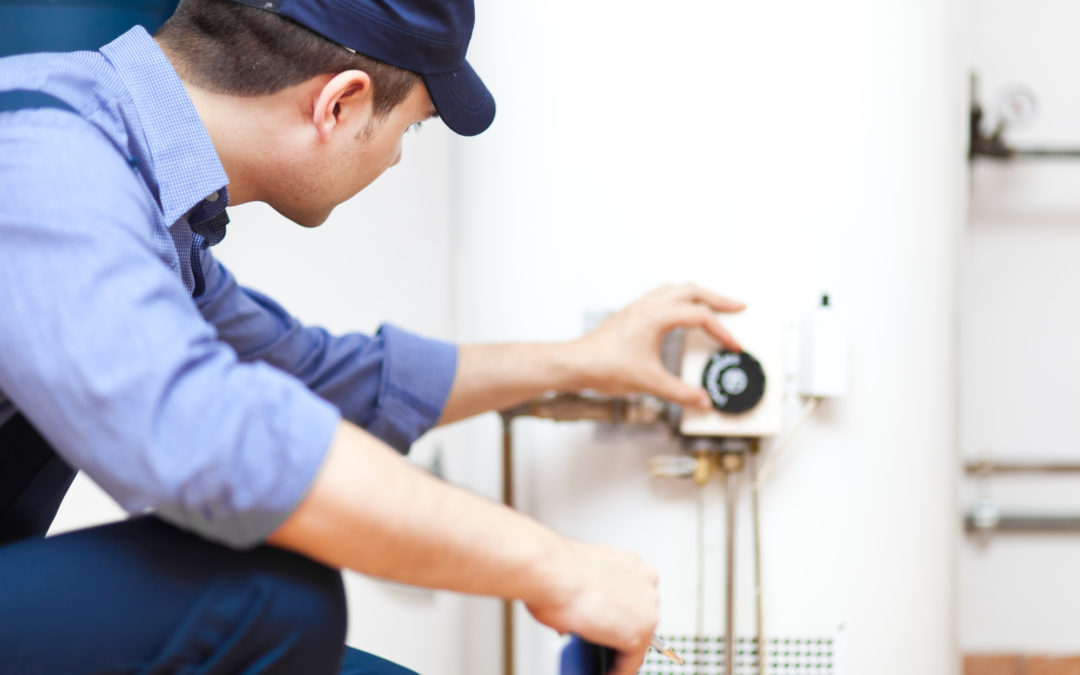
Whether you have a gas, electric or tankless water heater, regular water heater maintenance is the best way to guarantee top performance and longevity.
Your water heater is one of the most important appliances in your home, because it supplies the hot water your family needs. Without a supply of piping hot water straight from the tap, things can get pretty dicey pretty quickly around the house.
You might have a gas water heater, an electric one or a spiffy new tankless unit, but in terms of maintenance, water heaters fall into two basic categories – those with tanks, and those without. On average, your home’s water heater should last around eight to 13 years, depending on whether it’s a traditional tank model or a tankless. Of course, how well you maintain your water heater will have a huge impact on how long it lasts. Whether you have a gas, electric, or tankless model, your water heater needs regular TLC in order to keep supplying your family with hot water throughout its expected lifespan. Here’s your water heater maintenance checklist for tank and tankless models alike.
A conventional tank water heater heats up water using either gas or electric, and stores that water in its tank for use. Here are a few things you should do to extend your tank water heater’s life.
The pressure relief valve is a safety mechanism that prevents your water heater from exploding if too much pressure builds up inside of it. You’ll see a switch on the side of your water heater with a long, copper or plastic discharge pipe leading down from it. If the pressure inside your tank gets too high, the valve opens automatically to release it, and the discharge pipe directs the flow of water down to the floor and, hopefully, away from your furnace, electrical panel, or other sensitive equipment.
Test the pressure relief valve during your yearly water heater maintenance by placing a bucket under the discharge pipe and lifting the lever. If water comes out of the pipe, you’re good; use the lever to close the valve. If lifting the lever doesn’t open the valve, or if the valve leaks after you test it, replace it.
Whether you have an electric water heater or a gas water heater, it will have an anode rod. The anode rod takes one for the team, attracting corrosive minerals so that they corrode the rod, instead of the tank itself. Replacing the anode rod once every five years or so could significantly lengthen the life of your water heater.

First, shut off the gas or power to the water heater, then close the shutoff valve, open a hot water tap, open the pressure release valve, and drain a few gallons of water from the tank. If you see flakes of rust in the water, it’s time for a new water heater – but orange water is not necessarily a bad sign.
Check your unit’s user manual to find out where the anode rod is – if you don’t have the hard copy, you can find one online. You may need an impact wrench and some WD-40 to break it free, or at least a cheater pipe. Once you have it broken free, check for links around the hex head – if you see any, you need to drain some more water out of your tank before proceeding.
If the rod looks corroded, or if your tank is at least five years old and you’ve never checked the rod before, you’ll need to replace it. You can buy a flexible rod for heaters in tight spaces. Use pipe thread sealant on the threads instead of plumber’s tape, since tape can make the rod less effective. Flush the tank, or at least drain a few more gallons out, before turning the power and water back on.
You need to flush your water heater’s tank yearly to prevent the build-up of mineral sediment deposits that can rust right through the steel.
To flush your tank, turn off the gas or power and cold water supply to the tank. Open a hot water tap and the pressure release valve, then use a hose and bucket to drain the water from the tank until it runs clear and free of sediment. If you have a lot of sediment in your tank, you’ll need to empty it completely. Then, turn on the cold water supply to the tank and let the cold water run through it until it comes out clear. Keep flushing until you see no more sediment coming out of the tank.
Tankless water heaters heat water on demand, instead of storing it in a tank, but they still need regular maintenance. Many such units will indicate when maintenance is required, but you should plan to perform maintenance yearly, or more often if you have hard water.
To flush a tankless water heater, turn off the gas or power and cold water to the unit. Shut off the hot water valve that sends hot water from the unit to the house. Attach a garden hose to the outlet of a sump pump, and to your unit’s cold-water isolation valve.
Attach a second length of hose to your unit’s hot-water isolation valve. Place both the end of this hose, and the pump, in a five-gallon bucket. Then fill the bucket with five gallons of fresh, food-grade white vinegar.
Open both the cold and hot isolation valves on your unit, turn on the pump, and let the vinegar circulate through the unit for about 45 minutes. Throw out the used vinegar, fill the bucket with plain water, and flush the unit again for about five minutes.
While you are flushing your tankless water heater with vinegar, you should clean the air intake filter. The air intake filter keeps debris from getting into your tankless water heater. Cleaning it keeps air flowing smoothly into the unit.
You can access the air intake filter by removing your unit’s face plate – check the user manual for specific instructions. Once you’ve got the filter out, rinse it thoroughly with clean water, then dry it with paper towels before reinstalling it. Disconnect your hoses, screw on all service caps tightly, then open the cold and hot water valves and restore power and, if necessary, gas to the unit. Check for and address any leaks.
Water heater maintenance may not be fun, but it can help you save the money you’ll need to do the things you will enjoy, because it can drastically improve the life of your water heater. Take care of your water heater today, or tomorrow you could find yourself shelling out hundreds to replace it before its time. When you invest in American Home Shield, you will enjoy robust coverage for your geyser because many parts and components are included in the warranty.
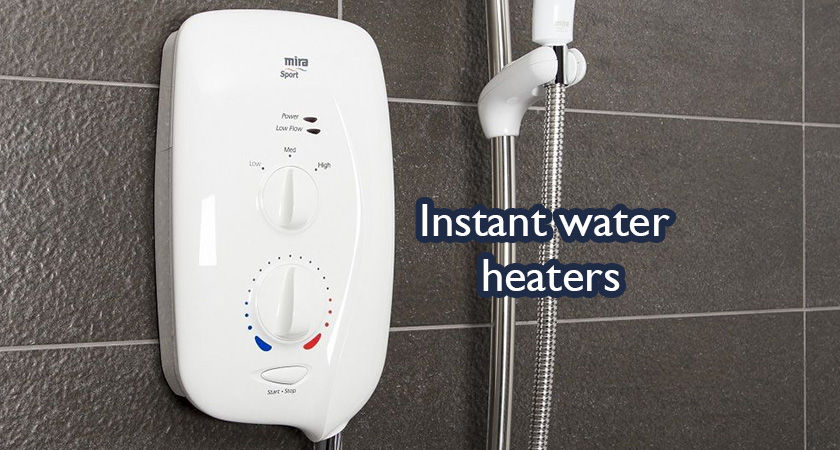
Also known as a tankless water heaters an instant water heater, as the name suggests provides instant hot water and thus avoid any water wastage. Instant water heaters do not have Storage tank there is no chance of storing hot water this makes the device small and compatible it also consumes less space then storage water heater. Before knowing which is the best version to pick, you need to know how an instant water heater works.
The instant water heater works on the principle of heat exchange. Storage water heaters have a storage tank which stores water engine sheets this container and then the water from the container is flow through pipes.
Thought the principle of operation of an instant water heater is the same, it has two different types of modes. These type of heaters are of two types are as follows.
Point of use heaters are small in nature and provide hot water in one or two outlets of your house. You can either heat the water in your kitchen or your bathroom or just both. They are very small and can easily fit on top of the shower or any corner of the bathroom or even under the sink. They are preferred by small families and bachelors because they are small, easy to use and they do not have lag time, that is the time taken for the hot water to reach your outlet. The types of water heaters are usually electric in nature. And they also consume a lot of electricity.
The second type of instant water heater is the whole house water heater. As the name suggests it does not need only one outlet. It has more than one outlet but it consumes energy it has a lot of lag time. It is usually chosen by largest families and bigger houses. Whole house water heaters are not only electric but they are also gas propelled.
Knowing the water tank capacity helps to decide the right one matching with the family size and to your home/bathroom size too. Most of the instant water heaters in the list come with a tank capacity of 1-3 liters of water which makes it good enough for small families to perform activities like hand wash, face wash, cleaning utensils, bucket and shower bathing.
But a 1,2, 3 or 6 litres capacity does not need to be the only thing you have to consider while buying an instant water heater. Different homes and different family sizes need different sizes of the tanks.
Given below is a table that will let you understand how many liters of water tank capacity supports which family size. Have a look!
Water Tank Capacity Vs Family Size
| Water Tank Capacity | Family Size | Application |
| 1 Litres | Singles/Bachelors (1) | Face wash |
| 2 Litres | 1 – 3 Members | Washing utensils |
| 3 Litres | 2 – 4 Members | Bucket bathing |
| 5 Litres | 4 – 5 Members | Shower bathing |
| 10 Litres | 6 + Members | Hand wash, dishes, bathing |
Hard Water is a bad news to your water heater’s health. Hard water is nothing but water with high mineral content such as magnesium and calcium which is not exactly a health hazard but can damage your clothes, containers and equipment it passes through. If the water you use contains more salts and minerals then it’s a clear indication of hard water which damages the lifespan of the geyser.
Try to be sure that the water you use for your daily usage is soft water. The best solution is to use corrosion-resistant water tank to avoid damage for heating element. It is also recommended to use a water softener inside the steel tank to convert the hard water to soft water.
Let me establish this first that Instant Water Heaters are notoriously known for their energy consumption.
A quality and best water heater should consume less power but provides hot water within a few seconds while turning it on than any basic instant geyser models. A lot of companies promise miracles on touch but often than not, they are all false.
So, it’s important for an individual to choose the energy-efficient water heaters for home without falling into the marketing gimmicks.
In general, the energy efficiency of a water heater is determined by its energy star rating (5-star is mostly preferred). Higher the BEE (Bureau of Energy Efficiency) star rating less power consumption and thereby increases the lifespan.
Typical storage geysers have a 2 KW power rating but instant geysers tend to have near double of that rating from 3-4.5kw. But your choice should also be considered while looking at your neighbourhood too.
For instance, you are living in a metropolis such as Mumbai or Bangalore, if all the houses in your vicinity are using 5 Kw instant water heaters, it will inadvertently cause load to your grid and cause it to trip or worse, fail.
Hence before going for a flamboyantly costly or high powered machine, please consider your surroundings and the capacity of your areas transformers and your own house wiring.
It is also important to look after the build design and quality. If the product you purchase has average build quality, then the electric water heater may damage quickly resulting in a huge loss – power issues, water leakage, improper functioning etc. It’s totally a waste of your time and money.
Also, nowadays people are showering their interest to the high-class geysers so as to fit perfectly into the home interiors and look stylish when you place in kitchen or bathrooms.
At this point, almost everyone knows that offline prices have a large gap with online prices. So it is important to compare the product you choose to that of the same product available in different portals. While Amazon is the defacto trust house for quality, you need to check with the warranty information of the product.
Popular brands offer high quality products along with the standards customer support services. When you find a damaged piece, visit the authorized service center to get repair for free of cost. Whereas, the cheap quality models has less lifespan and do not provide warranty information too. So, it’s better to go with the high-end geysers that offer decent performance throughout the usage.
a) Temperature Control
Tankless water heater comes with an adjustable temperature controller to set the water temperature at a steady rate. If you run the water quickly, then the water won’t be too hot. Hence, it’s good to maintain the ideal temperature conditions to flow the water and warm water instantaneously.
Understand that not every model comes with a temperature control option. This is usually a high end version option and basic versions have a default water boil temperature setting.
b) LED Indicators
LED indicator is a must-have feature in water heater that helps the user to know what operation is carried out. Ideally speaking, the water geysers come with 2 LED indicator options – green and red light. Green light indicates the power on/off and red for heating element.
c) Auto off Feature
This is an important feature of any water heater that automatically turns of the appliance even if you forget to switch off the heater after use. This feature helps to save electricity and protects the heater from burning or damage.
d) Pressure Valve
You should never forget about the pressure valve. Because, a pressure valve in a geyser plays a prominent role that allows hot water to fill in the bucket at the outlet pipe. It is made of sturdy materials, hence there are less damaging the valve. The bigger the pressure valve, the higher is the water pressure.
Pressure valves are usually narrow, thus give very narrow stream of hot water. Takes a few full minutes to fill up the bucket of water. Hence, look for a model with a slightly less narrow pressure valve. You don’t want to wait for a long time to get the already heated water right?
The cost of heating water consumes almost 20 percent of your household budget, second only to what you spend on heating and cooling your home. Despite this expense, water heaters are typically ignored until they break, leaving you with no hot water and, possibly, a flooded basement.
If your water heater is nearing the end of its useful life and you’re thinking of replacing it before disaster strikes, you’ll be happy to know that you have better choices, thanks to recent federal regulations that require water heaters to be more energy-efficient. New storage tank water heaters are required to operate more efficiently, and tankless (on-demand) water heaters are even more efficient than that.
Typically, homeowners replace their old water heater with one of the same type that runs on the same fuel—natural gas or electricity. Switching from a tank water heater to a tankless unit can be expensive because it requires you to retrofit your plumbing and possibly your electrical system. But if you’re building a new home or adding to an existing one, installing a tankless water heater may make economic sense.
Consumer Reports recently tested several electric and gas whole-house tankless water heaters from brands such as Bosch, Navien, Noritz, Rheem, Rinnai, Tempra, and Trutankless. We compared the results with those of conventional tanked heaters from Rheem, one gas and one electric, as well as with a Rheem electric heat pump water heater, which is a variation on a tanked water heater.
Following a “heavy use” industry standard test, we compared the performance of gas and electric tankless water heaters with the performance of their conventional tank counterparts. The test used a high draw pattern equal to using 84 gallons of water per day. That’s the daily equivalent of taking several showers, running the dishwasher, washing one load of laundry, and turning the faucet on and off multiple times. The test used an inlet temperature of 58° F for gas models and 74° F for electrics (plus or minus 2° F) and a target outlet temperature of 120° F.
Because the tankless water heaters performed similarly to each other, we averaged the results of each batch, gas and electric, and compared that score with the performance of the conventional gas and electric storage tanks and the electric heat pump model. Using the purchase price, annual energy cost, and an estimated cost of installation, we calculated the payback time for both new and replacement installations. Payback time was longer for a tankless unit that replaced an existing storage tank but more reasonable with new construction.
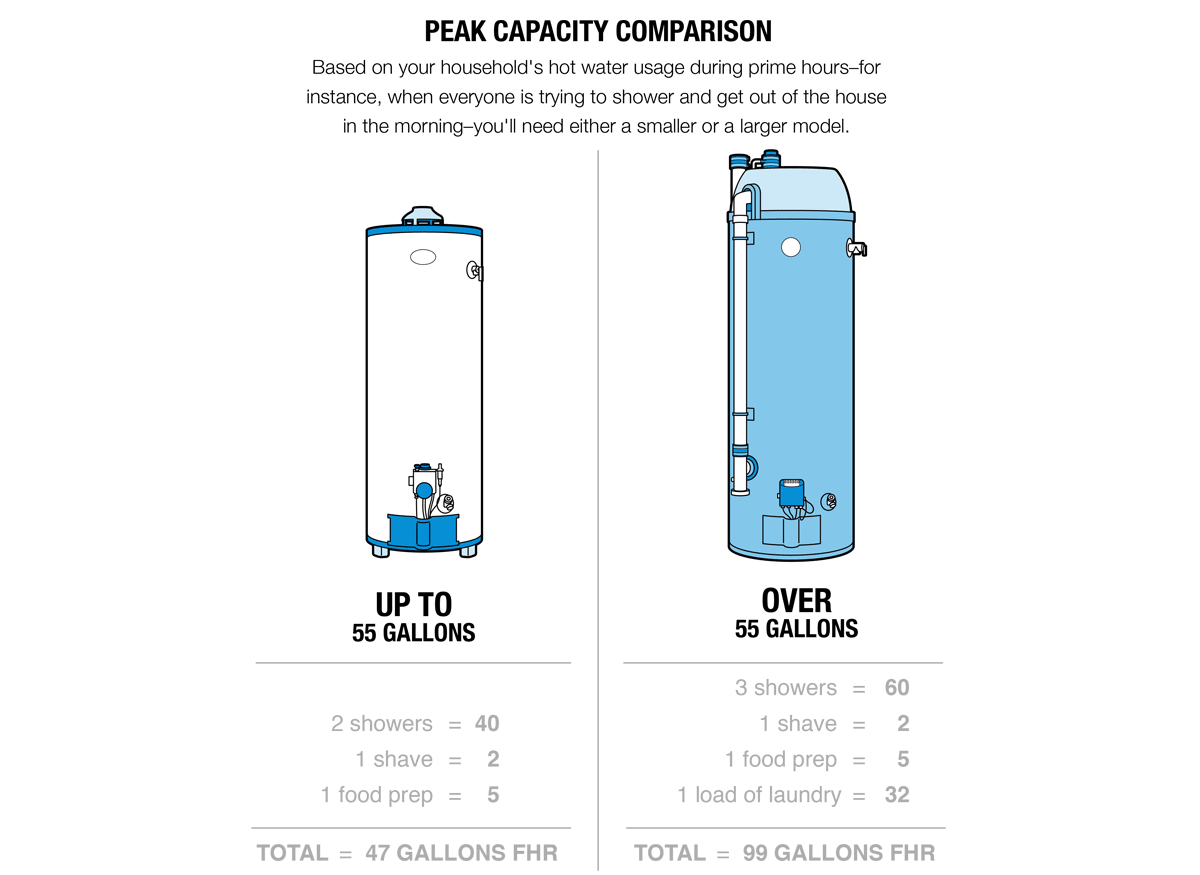
Tank water heaters typically hold 40, 50, or 55 gallons or more. The size you buy depends on the number of people living in your home and your peak water usage. A family of four, for instance, might take several showers, run the dishwasher, and wash a load or two of laundry in an average day, totaling 100 gallons of hot water or more. But that doesn’t mean that household needs a 100-gallon storage tank.
For storage tank water heaters, it’s important to consider the first-hour rating, which is the number of gallons a water heater can deliver in an hour starting with a full tank. You’ll find the FHR on the EnergyGuide label. To calculate what FHR will work for your home, use the calculator on the Energy Saver website.
As the result of recently updated efficiency standards, water heaters under 55 gallons now have a 4 percent boost in efficiency, while water heaters 55 gallons or more have efficiency gains of 25 to 50 percent depending on the technology used—heat pump or condensing. (See water heater types below.)
And don’t assume a new water heater will fit where your old one was. Because of increased insulation and other efficiency improvements, some newer models may be wider and/or taller than your old water heater.
Tankless water heaters, of course, don’t hold much water, so the number to look for is the gallons-per-minute rating (GPM). That’s the number that tells you how much hot water the heater can deliver over a set period of time. The higher the GPM, the more hot water the unit can deliver. If you have a big family and multiple bathrooms, you’ll need a tankless water heater with a higher GPM. A typical shower, for example, uses up to 2.5 GPM.
Depending on how much hot water you use and how you’re heating the water (gas or electric), there are several choices. Some types are claimed to cut energy costs by up to half that of regular storage models. But their added up-front costs mean payback time might be longer.
Check our gas and electric water heater ratings for more.
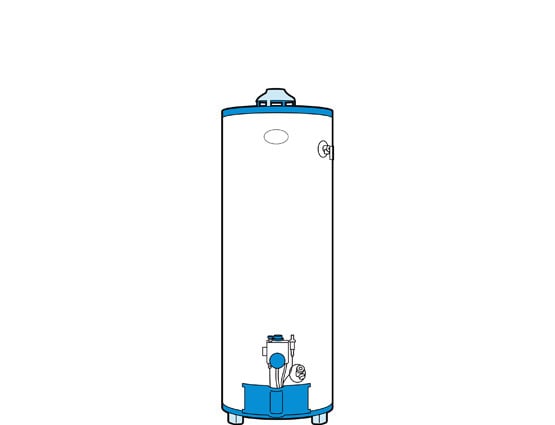
Storage tanks are the most common type of water heater. As the name suggests, these consist of an insulated tank in which water is heated and stored until needed, then emerges from a pipe on top of the water heater.
There is also a temperature- and pressure-relief valve, which opens if either exceeds a preset level.
Natural-gas water heaters typically use less energy and cost less to run (by about half) than electric water heaters, although you should note that gas models cost more at the time of purchase.
Shop Storage Tank Water Heaters on Amazon
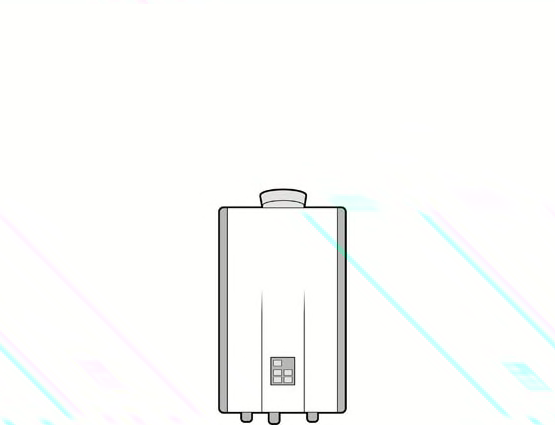
Rather than storing water, tankless water heaters use heating coils to heat the water as you need it. They’re more energy-efficient than a storage tank but provide only a limited flow of hot water per minute—about 3.5 gallons, depending on inlet water temperatures.
They’re best for people who typically aren’t drawing water for more than one use at a time—such as running a shower and dishwasher simultaneously.
Tankless models are best for homes that use natural gas to heat the water; electric models might require an expensive upgrade of the home’s electrical capacity.
Shop Tankless Water Heaters on Amazon
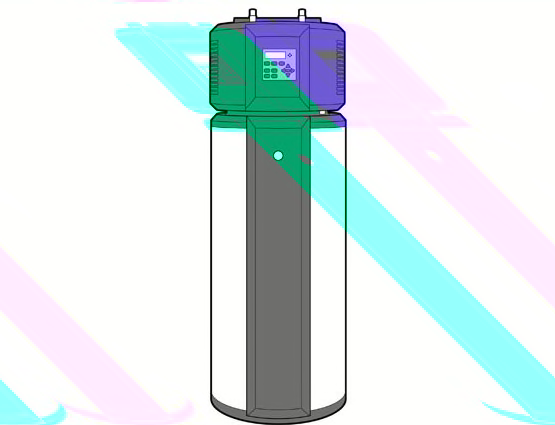
These capture heat from the air and transfer it to the water. They use about 60 percent less energy than standard electric water heaters. And while they cost more than electric-only models, installation is similar and payback time is short. But they don’t work well in very cold spaces and need to be placed in an area that stays about 40° F to 90° F.
And because the heat pump is on top, a hybrid water heater needs as much as 7 feet of clearance from floor to ceiling. You’ll also need up to 1,000 cubic feet of uncooled space to capture enough heat from the air as well as a nearby drain to discharge the condensate.
Shop Heat Pump Water Heaters on Amazon
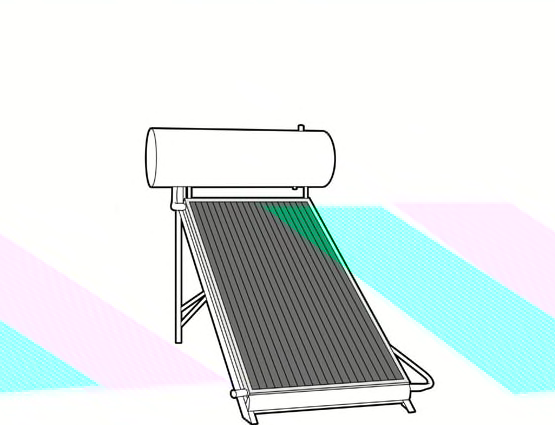
A roof-mounted cell absorbs the sun’s heat and transfers it to an antifreeze-like fluid in a closed-loop system that runs to the water tank. The best deliver stellar savings in summer, making them attractive for warm, sunny regions. But savings suffer on cold and cloudy days. Most models employ a backup system that kicks in when needed.
Even with federal and local rebates, what you’ll spend to buy and install a solar system can mean you wait 10 to 30 years to recoup your costs.
Shop Solar Water Heaters on Amazon
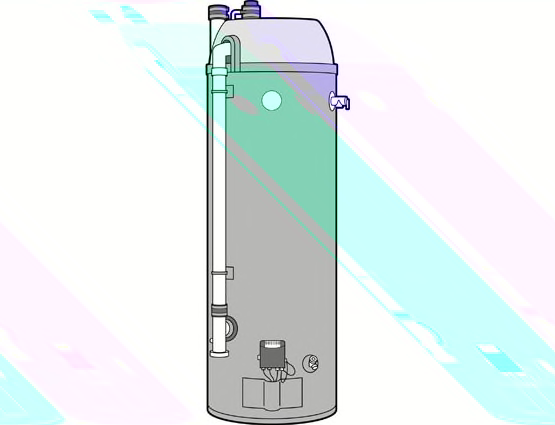
Condensing water heaters are an option if you heat with gas and need a unit with a capacity of more than 55 gallons.
These models have a tank like a conventional water heater, but they capture exhaust gases that would normally go out the flue, which wastes energy. These gases are blown through a coil in the base of the unit, where incoming cold water can absorb most of the heat.
Shop Condensing Water Heaters on Amazon
Warranty: Coverage for water heaters typically runs three to 12 years. While you’ll usually pay a bit more for longer-warranty models, we’ve found that they tend to have larger elements or burners that can speed up water heating and have thicker insulation for less heat loss. Choose a water heater with the longest warranty available.
Anti-scale devices: Some brands advertise features that are supposed to reduce buildup of mineral scale at the bottom of the tank by swirling the water. While scale can shorten the life of the heating element, you don’t need to invest in fancy features to get a water heater that lasts. Just look for one with a 12-year warranty, which typically includes a longer or thicker element.
Brass vs. plastic drain valves: These are situated near the base of the water heater for a garden hose that drains the heater. Look for brass drain valves, which are more durable than plastic.
Glass-lined tanks: Designed to reduce corrosion.
Digital displays: Help you monitor levels and customize operation. Some electric/heat pump hybrid water heaters let you set a vacation mode that uses just the heat pump for added efficiency when you’re away. Displays on solar water heaters often show tank and collector temperatures, along with pressure readings and other info.
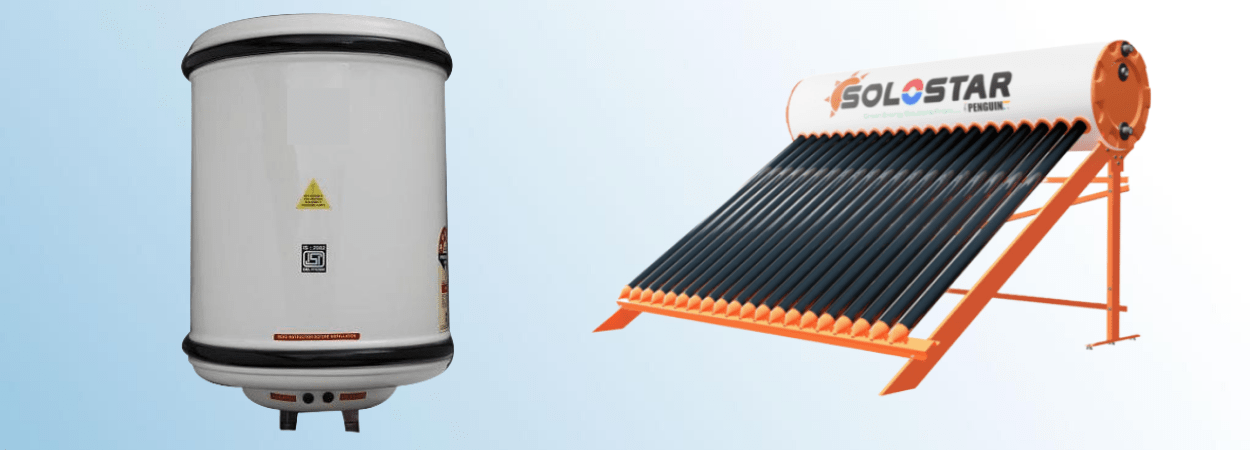
But what makes this possible with a minimum effort? A geyser/water heater, right. Yes, installing the best water heater in your bathroom makes all the difference. So, what are you waiting for? Get the best water heater for your home now.
Choosing the best water heater is not that simple, as you are presented with plenty of options in the market. To make this journey easy for you, I have completely dedicated my three days to inquiry and review the top5 best geysers available in the Indian market.
In this process, I visited the store and tested the product and talked to the existing customers about their experience and finally, I came up with this huge list. The ranking of the 8 best geysers is completely based on their features, inner tank material, type of water heaters, electrical consumption, bar pressure, warranty, and manufacturing company without reservation.If you are a new buyer or installing a geyser for the first time in your house, so I suggest you read the entire article and water heaters buyer’s guide to make your choice the best.
So, let’s dive in!
For a glance, here are the listed top 8 best geysers in India 2020 below if you are running out of time. And, I also have a detailed review of every product mentioned in this list so don’t skip anything if you are in a hurry, take your time to come back and enjoy the original flavor.
SALE

V Guard is a name for its reliable build quality and advanced technology, and this creates a stress-free and user-friendly experience for the consumers.
The new V Guard Victo Plus is ultra-stylish and highly energy-efficient, this water heater is a perfect fit for the modern homes and big families (4 to 8 members).
This Victo plus geyser is provided with a digital display at the front to indicate water temperature and a jog dial below it to regulate the geyser. These features provide a hassle-free and peace of mind while using a water heater.
The inner tank of this water geyser made with thick gauge high-quality steel and glass-lined anti-corrosive coating for the improved heating performance and longer life of the machine.
The Incoloy 840 heating element is used in this machine, which is highly efficient in heating and it takes less time to heat water. The outer layer of this water geyser is built with robust mild steel and corrosion-resistant Superior Powder Coating Technology to offer durability. These provide rust-proof ABS and cover.
PUF insulation and easily controllable temperature knobs provide smooth user interaction with the product. This V Guard Victo Plus is best suited for the apartments or multi-story buildings as it can withstand the 8-bar pressure.
For safety, this water heater consisting of four layers they are a thermostat, thermal cut-out, sacrificial anode, multifunctional valve. This BEE rated 5-stars machine is highly energy-efficient and provides you with a sense of relief in the long run over its peers in the market.
For the installation call V Guard customer care, they install your geyser in 1-2 days, and all the accessories required have provided in the box
SALE
Bajaj is one of the topmost electronics manufacturers in India for decades, its quality, service, and trust makes it the most preferred choice among Indians.
The Bajaj New shakti 15 liters water heater stood 2nd place in this list, and it is compact and stylish in design yet provides sufficient water storage tank.
Geysers or water heater’s inner tank life depends upon the type of water we use, whether it is soft or hard water, hard water upon regular usage leaves scaling a chalky substance in tank.
This phenomenon drastically reduces the life of the water tank and heating element in geysers. Hence to protect, the Bajaj new shakti inner tank has laminated with a glass line coating for the inner tank and the outer body is made of plastic.
Heat retention is no more a problem with this Bajaj new shakti PUF insulation even though geyser is turned off, this insulation traps the heat inside the tank throughout a day.
This geyser, combined with the BEE 4-star power rating, gives you freedom of lighter pockets and better energy consumption.
Safety is not a luxury but a necessity!
Better safety is provided with a 4-in-1 multifunctional valve, a fire-retardant cable, pressure shut off, and a long-lasting Incoloy heating element.
All these security measures guard’s safety of the water heater.
Similarly, on the other side of the coin, this water heater doesn’t provide necessary accessories for the installation, even a 3-pin male connector for power supply. So this adds extra cost up to Rs.1600 approximately.
For the installation purpose, you have to call Bajaj customer care on 18001025963, within 1-2 days the installation is done remember, it is free of cost.
SALE
This Crompton Greaves Amica is one of the best-selling storage waters heaters in India. This water heater/ geyser comes with a complete advanced feature like 5-star rating – saves power, Nano poly band technology – superior performance and longer life, 3 level safety protection – Risk-free operation and Magnesium anode – for corrosion protection.
All these features and technologies combined to make this Crompton water heater bestseller, not only this it’s elegant design adds beauty to your bathrooms.
A heavy-duty anode rod has placed inside the tank which has a stainless steel core that protects the inner tank from the corrosion, and it increases the life of the geyser. A unique polymer and copper heating element have used for faster heating and longer life. As a result, it prevents the formation of scaling or any other corrosive deposits and delivers superior heating performance.
Leakage of the tank is also one of the significant problems which have seen with the age of the water heater. This problem is identified early and fixed by Crompton using its ‘single weld’ technology.
This water heater can withstand water pressure up to 8 bar pressure, and it makes this geyser to fit for high-rise apartments, and in case of pressure overshoots, a safety valve is provided to discharge the flow.
The BEE rated 5-star water heater offers a significant power saving and makes your pocket a little lighter every month.
For the installation purpose call on Crompton customer care as soon as you receive the product, then they assign a technician and installation done in 1-2 days. Important, inlet and outlet pipes for the installation have not provided in the box which adds up to the cost Rs.300-400.
SALE
The Usha Misty 25 liters water heater is pleasant in looks, and its elegant design adds beauty to your bathroom interiors and it is a perfect fit for modern homes for a classic look.
This water heat body is made durable and tough with ABS anti-corrosive material, this robust and stays bright even if water flashes on it. For the rust-free and corrosion, the inner tank of the water heater consists of a heavy-duty magnesium rod, which prevents the accumulation of rust or scaling.
Its High-grade superior PUF insulation best maintains heat retention, and this indirectly affects power consumption. The whirl flow action in this heater improves energy efficiency and ensure faster healing.
This geyser can withstand up to 8 bar pressure, which is best suited for the high rise or multi-story buildings. If in case of sudden pressure rise of water, a safety valve is provided for discharge.
This machine has earth leaking protection, which ensures the safety of operating personnel. A thermal cut out is also present in this machine which cut-offs the supply when the temperature of the water exceeds the maximum set value.
The water heating time of this machine is a little longer, which is not expected from Usha except this everything is best.
For the installation purpose call Usha customer care, they assign you a technician, and it gets done in 1-2 days. Important, Installation accessories are not provided in with the package, which costs you around Rs.350-500 (approximately, the cost depends upon your area).
[su_box title=”What I don’t like:” box_color=”#bf000a” radius=”4″][su_list icon=”icon: ban” icon_color=”#bf000a”]
SALE
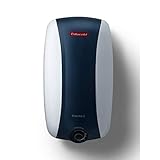
This Racold Eterno storage water heater provides a full premium and rich look besides this it offers a bunch of impressive features, which makes this geyser even more trendy.
The intelligent ‘smart bath logic’ feature allows you to choose a mode of bathing depending upon your requirements by adjusting its knobs. This feature alone saves 40% of electricity consumption (may vary depending upon location and usage )
The super polymer high performance of Eterno 2 has a unique polymer protective coating to protect the water tank from scaling and corrosion. The heating element of this water heater has coated with Special Titanium enamel, which ensures faster and efficient heating. This protective cover improves the life of the heating element.
Water pressure is one of the crucial factors to consider while choosing the best water heater, and this water heater has 8 bar pressure, which makes it so suitable for high rise buildings or high pump applications.
The smart mix technology of this Eterno 2 consists of a special deflector ensures the slow mixing of hot and cold water inside the tank, keeping the water hot for a longer time.
For the installation, call Racold customer care on 18604252288, they assign a technician for this purpose, and he gets it done in 24 – 48 hours. Important, depending upon offer on this product installation accessories are provided with the box, makes sure you check them first.

 Water Heater